Stop Leading a Fiefdom: How to Get Senior Leaders Thinking Company-First
Are your department heads acting more like heads of fiefdoms than enterprise leaders? Getting senior managers to transition from departmental loyalty to a company-first mindset is a critical shift that rarely happens on its own. Discover the practical reframes, checklist questions, and coaching strategies you need to align your leadership team and successfully drive your business forward.
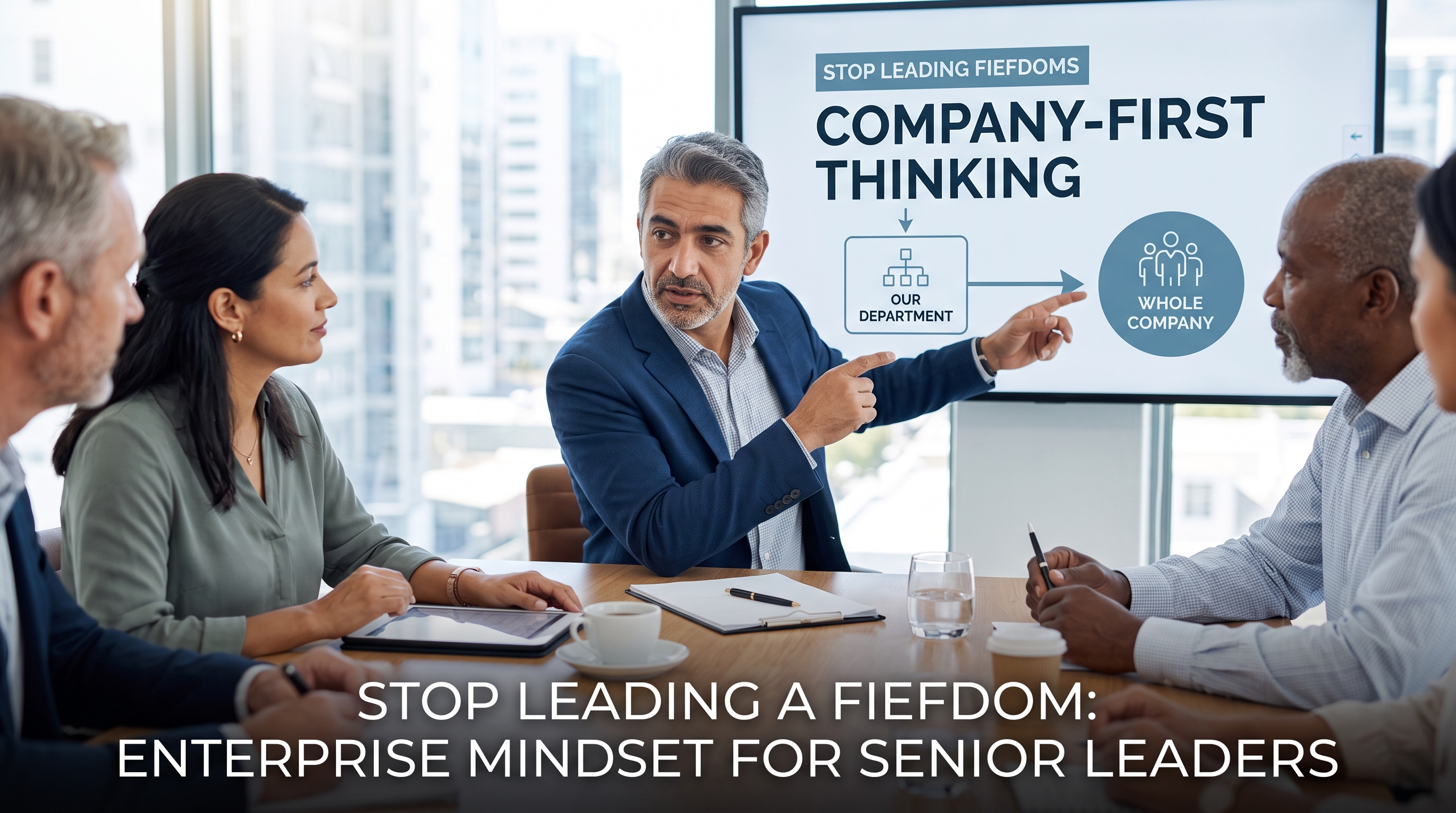
It’s a shift that almost never happens on its own and it is a big leap for many senior leaders. People that have been asked and rewarded for building deep expertise with a client or a functional area are now being asked to think bigger, at the enterprise level. Those are two different muscles and though they rely on each other, they operate different parts of the body. Often this leads CEOs to get a senior leader (or group of leaders) that instead of helping to push the business forward actually act like heads of fiefdoms. They are focused on THEIR team, advocating for THEIR clients, and making sure THEIR work is seen - but you need them to be thinking about OUR team, OUR clients, and OUR work.
To get there a mindset shift is required - one that moves from strategy, advocacy, and drive in a single area to the entire company being the focus. New senior leaders don’t automatically know how to do this - it requires an adaptation of their skills, thinking, and honestly, goals. And without training and guidance on how to shift their mindset to focus on the whole, CEOs end up playing referee between leaders while continuing to carry the weight of pushing the business forward alone.
To help senior leaders be successful contributors at the enterprise level they need to understand how to turn the knowledge they know and the skills they have towards a business-centered mindset, not a departmental, client, or team one. So how can an owner get their senior leadership team there? Start with a reframe.
Reframe: The Company Itself Becomes A Client
Begin with a simple exercise for senior leaders - a table setting that gives them the right framework to start working at the higher level you need them. A simple mantra:
There are no individual clients anymore. There are no individual departments you work for. At the end of the day, the company is now your client. This is the north star of your work from now on.
When you view the company as your client, you stop asking "What does my team need?" and start asking "What does the whole business need from me?" You serve the people, the processes, and the clients holistically - not just the department or account you happen to know best. You set goals for the business. You hire for the business. You make hard calls for the business.
To put it more bluntly for people - the top priority is that the whole company functions in a way that means everyone has jobs, gets paid, and grows in a way that makes sense for our goals and success. Not one account. Not one team. Not one person. The whole.
Effective leadership in professional services requires a deep understanding of both the business and the components that drive it - and the company-as-client frame is how those two ideals work together for people. It gives a framework of how to work that has a foundation in what your senior leader is already good at, while pointing them in the direction you need them to go.
Letting Go of Departmental and Client Loyalty
It may be easier said than done for some of your leaders, but the key to this mindshift being successful and unlocking the contributions you need is that each of them must let go of previous loyalties.
This shift might be easier said than done, especially for former good doers who are considering for leadership. Their old teams are watching. Their instincts are telling them to go a certain way with their support or time. And they are struggling to know how they are valuable in this new structure. They know what drove their success - it probably got them the seat they are in now. But what does that mean now?
New senior leaders must be shown how they are a piece of a larger puzzle AND what the entire puzzle looks like. CEOs and founders must give their new senior leaders the ability to gut check themselves for things they advocate for or put their support behind. Start by giving them a quick checklist of questions to go through to make sure they are making calls based on the business and not on their previous teams or jobs. Questions like:
When my old department's interest and the company's interest disagree, which one do I actually pick?
Do I celebrate my former team's small wins while ignoring major milestones from others?
Am I harsher when judging the mistakes of certain departments?
Do I have a cross-departmental view on this or just one team?
How much do I need to know before I make a call, and do I have the right voices in the room?
Do I make certain groups “prove” something more than others? Why?
By helping your new senior leaders understand where their bias or blind spots might be when it comes to their former teams - and how to recognize and address it - you can start to make sure that they are approaching what you need from them from the right place.
Hard Calls in Practice: Budgets, People, and Hard Decisions
The right mindset sounds all well and good, but what does it look like to employ it in practice?
Your new senior leaders are going to come up against some hard calls that stress their enterprise level thinking and it is good to prepare them for as much as you can in advance of those times. Humans don’t really like change - and will often default to what they know and are comfortable with when things seem uncertain. To prevent your new senior leaders from falling back into old habits and loyalties, prepare them for the tough decisions.
Hard people decisions. You'll hire, promote, and sometimes exit team members - including people from your former department. The person you came up alongside may not be right for where the company is going, and now that's yours to see clearly and act on.
A wider financial view. Your function can be crushing it while the company bleeds - and that spells bad news for everyone in the long-run. Senior leaders need to understand how the business actually makes and loses money - not just whether their team hit its number.
Supporting decisions you personally disagree with. Within reason, you back the broader strategy even when you'd have voted the other way - because openly undermining it erodes the very entity you're now responsible for. (Fight hard in the room, then row in the same direction once the call is made.)
Making these choices might feel disloyal to some of your senior leaders. They may struggle with their new role in the decision while still having close relationships with team members. Prepare them not only for the choice itself, but how to talk to and navigate any team feedback they may get afterwards.
How to Prepare Your Next Leader for This Shift
Actually building this mindset shift in your new leaders isn’t a one-time training or workshop - it is intentional guidance and stewardship from the founder, as well as consistent support and resources. Here are some good places to start:
1. Name the shift out loud — before they get the seat, not after. Lay this change out on the table for your new senior leader: "You no longer represent your old team. You represent the whole business." Frame it from the beginning and make it the connective tissue of how they get into their role. Write it down and set the expectation - don’t hold them to a standard they didn’t know about.
2. Pull back the curtain on the money. We can feel your cringe from here. This is a hard one for many founders and CEOs but it is critical to building successful senior leaders that put the business first. Give your new leaders real visibility into full company financials and cross-departmental tradeoffs - not just their function's numbers. You don’t have to show them your personal finances, but you do need to show them how the company makes and loses money if you want them to properly serve on the team.
3. Coach the tradeoffs live. Bring them into an actual decision where their old department loses. Walk through the why together. The reframe only sticks when they feel the tension and choose the company anyway - but doing that alone is less likely to happen successfully or at all. Having you present to talk through scenarios, create talk tracks, and really go through pros and cons is crucial to the understanding and buy-in you need.
4. Train early and on purpose. Senior leaders need to be trained on how to do the job - even if they did it somewhere before. They need to understand what you need from them, what the role requires, and how to operate in the way that drives the business forward how you want. No one just knows what to do - no matter how successful they were at their last job. Invest the time and resources - it costs you far less to do the work early than if the people in these seats don't work out.
The mindset shift to senior leader is one of the most difficult moves a person can make in their career. The owners who name it, resource it, and coach it are the ones who have leaders that actually help push the business forward.
Preparing for your next senior leader (or have a new one on your team) and want to make sure they have the right mindset for the job? We can help you build the framework and training you need. Reach out to us about a discovery call today.