New Hires Aren’t the Only Ones Who Need Onboarding: A Case for Re-Onboarding Plans for Career Transitions
Onboarding shouldn't stop after an employee's first day. Discover why structured re-onboarding plans are vital for career transitions, boomerangs, and returning leave-of-absence staff. Learn how to set up scalable re-entry frameworks to boost retention and keep your team aligned.
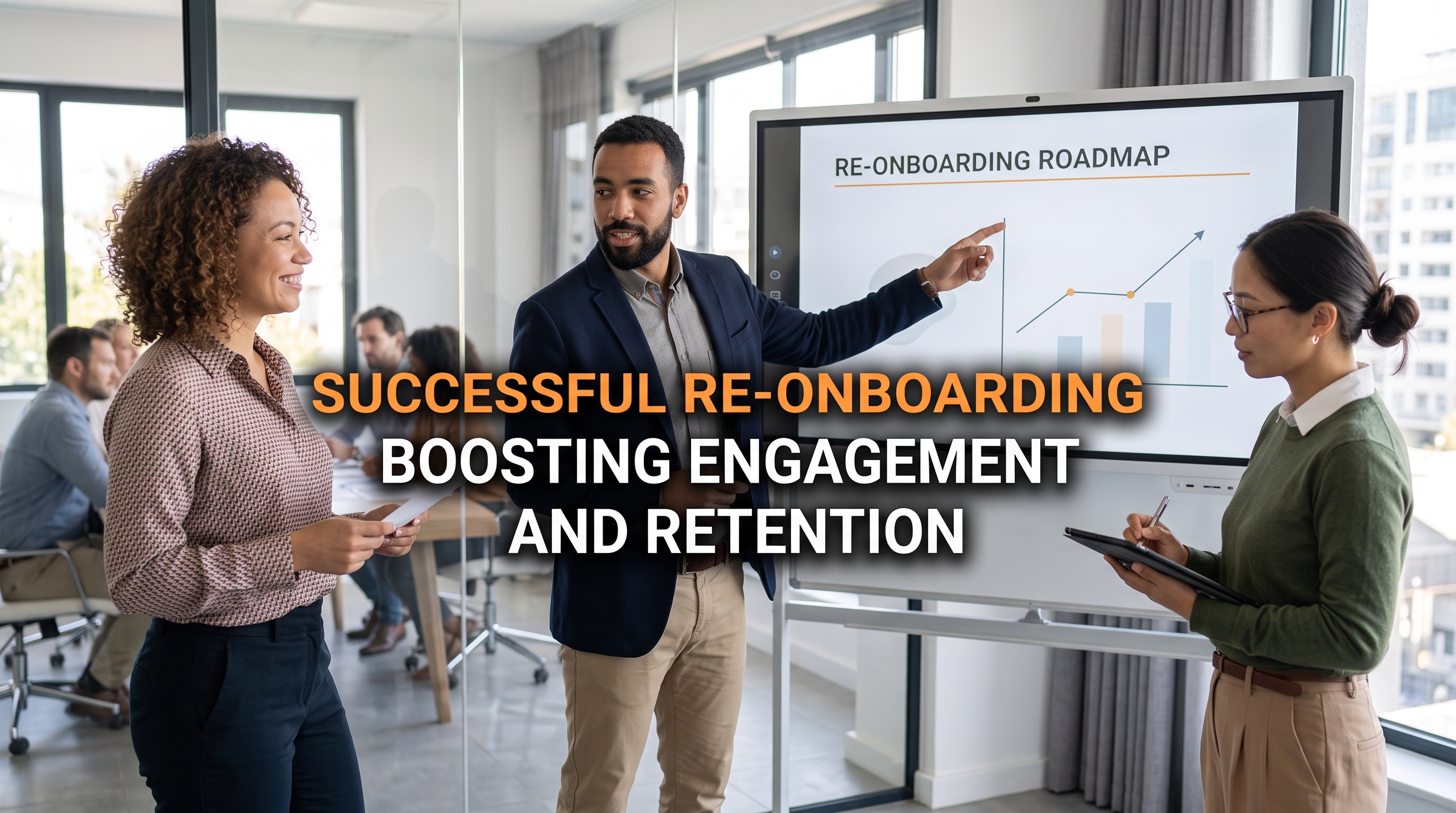
If your onboarding plan only exists for the true day-one hire — the person who's never touched your Slack, met your team, or seen a client deck — you're leaving many of your transitions to chance. Boomerang rehires. People coming back from leave. That stellar employee you just promoted into a role they've never actually done. Every one of those is a transition, but most professional services firms give them far-less thought and planning then a new person starting. There might be a few meetings, a few docs shared, and then you send them off, expected to do the work as it should be done like they never missed a beat. But there are people they’ve never met, new projects to work on, new tools to learn, and probably a few elements they knew well moved around or sunsetted. Assuming that a person who has been away from your organization for a good amount of time (multiple months to years) can just come back in mid-stream and pick up where they left off is a mistake that many firm leaders have - and it can set the person and the company back.
Enter, re-onboarding plans
Re-onboarding is a scaled-down version of the onboarding you already do for new hires, triggered any time something isn't net new but still requires re-orientation. Because onboarding isn’t a one-time checklist for someone to complete and do their job. It is a program that is about orienting and aligning a person to the who, what, when, how, and why. That can change with something as simple as a promotion or something as large as leaving the organization and returning again a few years later.
Key scenarios where you might see this pop up in your organization:
- Someone returning from a leave of absence
- Someone moving into a new role or getting promoted
- A boomerang employee coming back after time away
The Hidden Cost of Skipping Re-Onboarding
When you skip it, you're asking someone to jump into the book of your company mid-novel — to figure out on their own what they missed so they can help you write the rest. Some people can spend some stressful weeks and months figuring it out and get into the groove of the work. Many struggle silently.
We already know what a bad onboarding can do because we see it with new hires - turnover, disengagement, struggling to get what they should be doing and how. This can play out because people aren’t fully aware of expectations, they haven’t received the training to do things how you do them (even if they know what they are doing) and they haven’t had a chance to connect or establish relationships with the team. We see some of these same problems pop up in groups that are ripe for re-onboarding: Expectations that don't match reality? That's exactly what a promoted employee feels when nobody tells them what the new job actually requires. Disconnection from team and culture? That's the boomerang hire who walked back into a company that reorganized twice while they were gone. Leaders may just shrug it off because “they already know us,of course they get it”. But in reality, people who have been gone from the organization or are in a completely new role are in-need of ramp up time, a greater sharing of knowledge, and the ability to reconnect to the company in the present.
Now let’s take a look at some of the biggest examples of career transitions that re-onboarding can help smooth out.
Scenario 1: Returning From Leave
Someone's been out for eight weeks — parental leave, medical, sabbatical, whatever. In that time your team landed two new clients, rolled out a new tool, and had two people leave the team. The person that has been on leave shows up to their first day back and knows none of this - some they hear through the grapevine, some takes weeks or months to reach them. The solve?
Build a catch-up doc — a short running summary of team news, client updates, and process changes — and hand it to them before they’re expected to jump into any work or meetings. Detail what things they need to have a full session on, what they can read to know, and what wasn’t touched while they were gone. They have likely been through a major life situation - give them time to not only learn what is going on, but re-orient themselves to working again after a long absence. The re-entry curve is real, and giving them an ongoing but gentle ramp can help them successfully re-align to the work.
Scenario 2: Moving Into a New Role or Promotion
This is the one firms skip most, because it feels unnecessary. "They've been here three years — why would they need onboarding?"
But tenure at the company doesn't equal readiness for the role. A promotion often means new tools, new SOPs, and a shift in what success looks like. The person you just made a team lead has never led people. The person you just made a strategist has never lead a client on their own. They need guidance, training, and time. A re-onboarding plan can help create that.
This matters so much because internal movement is the transition category that is going to happen the most at your company. They already have a lot of knowledge about you and the work in general, but you have to remember they have likely never done the job you are asking, and still need some foundation setting. A deliberate re-onboarding process, instead of an informal, whoever-asks, is how you make internal growth fair and repeatable.
So grant access and training on the new tools and SOPs, schedule fresh 1:1s with the key stakeholders they'll now work with, and get crystal-clear on expectations for the new role.
Scenario 3: The Boomerang Employee
Boomerang hires can often be viewed as the best of both worlds - they know you but they also have experience outside your company that they can bring in - fresh ideas, perspectives, and ways of work. But they are a group we will often assume has retained exactly how to work at our company - and they haven’t. Especially those that have been away longer - there is a lot of change that can (and does) happen in a short amount of time at professional services firms. So to make boomerang employees as successful as possible, scale the plan to the time away. Someone gone six months needs a solid catch-up. Someone gone three years needs a near-full re-onboarding: your current tools, process, org structure, who's who now. Skip only what genuinely hasn't changed, and be honest, because "nothing's changed" is almost never true at a firm that's growing.
What Belongs in a Re-Onboarding Plan
You don’t need a document as long as “Lord of the Rings. But you do need a robust set of documents and resources that help a person orient themselves to the current status of things, get information about what they missed, and align on how to work going forward. We suggest you build the plan according to the time away from your company by the person and the type of transition.
1. Internal moves: Training and access to the new tools and SOPs, plus scheduled meetings with new teammates and stakeholders.
2. Short absences (under 6 months): A catch-up doc on team and client news, a quick read-vs-meet triage (some things you skim, some things need a live conversation), and a slow ramp back to full contribution.
3. Long absences (6 months to years): A fuller re-onboarding project covering tools, process, and structure — skip only what truly hasn't changed.
4. Always: assign a buddy alongside the manager. The manager owns expectations; the buddy is the safe place for the "wait, how do we do this now?" questions and a little moral support. Everyone re-entering needs both.
None of this has to take a ton of time - it could be a few hours or a few weeks. But no matter the length, the time investment is worth it to make employees feel supported and set them up for success.
And managers should be held accountable to how well a person re-onboards. Part of their job is to shepherd the person to success - so they should be invested in not just performance, but how well the person is re-integrating.
Don't Forget: Clients Sometimes Need Re-Onboarding Too
The concept of re-onboarding applies to clients too — a new point of contact deserves the same re-onboarding as an employee moving into a new role.
Changes to a client team can happen a lot - your current point-of-contact gets promoted, leaves, or hands your account to a new business unit. Suddenly the person controlling your relationship has no idea how you work, what's in scope, or why you do things the way you do. And here's the mistake we all make: don't assume the client's team briefed their new contact on you. They probably didn’t - they were focused on their own transition. Or they assumed you would do it.
So re-onboard that client proactively by focusing on what the new point-of-contact(s) need to know for you to work together successfully. Share your client handbook, walk them through your scope, introduce key contacts on your side, get them in the groove of unprompted updates. Continuity of understanding is what keeps professional services relationships alive — and when a new contact inherits confusion instead of clarity, that's exactly when accounts quietly slip away.
Building a Re-Onboarding System That Doesn't Take Forever
In all honesty you already have most of this. Your new-hire onboarding, your client onboarding, your SOPs — that's your source material. Re-onboarding is mostly about deciding when to trigger a scaled version and how deep to go.
Start with a simple trigger list: leave, promotion, rehire, new client contact. For each, name the depth (catch-up doc through full project) and assign a manager and a buddy. That's a system. It fits on one page. And it turns transitions from a moment of guesswork into a moment of belonging.
Ready to build a re-onboarding system for your firm? Talk to prism+spire about designing scaled onboarding plans for every transition — employees and clients alike. It's less work than you think, and a lot cheaper than replacing the people you already have.